
The Early Career Training Programme (ECTP): One Year On!
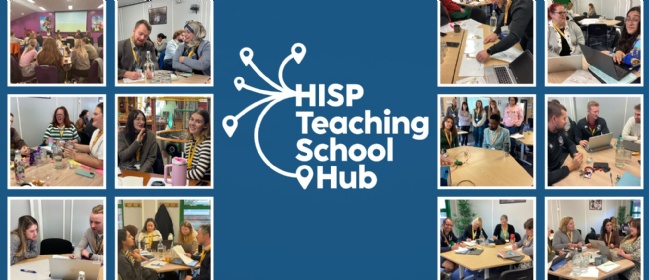
A year on from the launch of the Early Career Training Programme (ECTP), we are proud to reflect on the impact the programme is already having across our partnership schools.
Working alongside our lead provider, the Education Development Trust (edt), we were excited from the outset by the programme’s clear commitment to developing early career teachers through a more responsive, personalised and practice-driven approach.
Building on the strong foundations of the previous Early Career Professional Development Programme (ECPDP), the ECTP introduces a greater emphasis on instructional coaching - recognising the vital role mentors play in supporting early career teachers through regular, focused development rooted in everyday classroom practice. Rather than simply discussing educational theory, mentors are empowered to work alongside ECTs to model, rehearse, observe and refine teaching strategies, helping new teachers translate evidence-informed approaches into confident classroom practice.
By creating structured opportunities for deliberate practice, feedback and reflection, the programme enables mentors to draw on their own professional expertise while tailoring support to the needs of individual ECTs.
A Programme for ECTs
At the heart of the Early Career Training Programme is a carefully sequenced curriculum designed to support Early Career Teachers to grow in confidence, expertise and professional understanding throughout their first year in the classroom. Grounded in the Initial Teacher Training and Early Career Framework (ITTECF), the programme combines evidence-informed self-study, personalised coaching and collaborative professional dialogue to ensure that development is both rigorous and responsive to individual need.
The first year of the programme focuses on securing and extending the core principles of effective teaching and learning through a carefully sequenced curriculum rooted in the ITTECF. Across the first three modules, ECTs explore how to create positive climates for learning and develop an understanding of how pupils learn most effectively. They also deepen their understanding of adaptive teaching, professional collaboration, curriculum and subject knowledge, alongside the effective use of assessment, questioning and feedback to support pupil progress. Throughout the programme, the emphasis remains firmly on translating evidence-informed approaches into purposeful classroom practice.
A key strength of the programme is its personalised approach. Each module begins with a knowledge diagnostic quiz, enabling ECTs to identify areas of confidence as well as aspects requiring further development. Alongside this, mentors undertake practical classroom diagnostics through focused drop-ins at the start of each module. These observations provide valuable insight into the ECT’s current practice and help mentors and ECTs work together to identify strengths, developmental priorities and an agreed action step for the term ahead.
This process ensures that professional development is tailored and purposeful. Regular mentor drop-ins throughout the term allow action steps to be revisited, refined or adapted as practice develops, ensuring a close connection between the evidence-informed theory explored during self-study and its practical application in the classroom.
Weekly mentor discussion meetings further strengthen this connection between theory and practice. Using given prompts, mentors support ECTs to reflect deeply on their learning, explore the reasoning behind effective approaches and consider how the evidence base translates into their own classroom context. These conversations create valuable opportunities for professional reflection, challenge and encouragement.
Alongside their self-directed study, ECTs have also attended three face-to-face training events during Year 1. These sessions have provided opportunities to engage collaboratively with colleagues from across the region, rehearse practical strategies, explore educational research and reflect on classroom experiences within a supportive professional community. The training has consistently combined evidence-informed thinking with highly practical classroom application, helping ECTs develop approaches they can implement immediately in their own settings.
‘Mentoring is very extensive and helpful. I feel fully supported in all aspects of my training. I can ask anything, at any time’ Year 1 ECT
‘My mentor has been super helpful! We have regular meetings to go through strengths and areas for development. My mentor is very supportive and will give advice when I am unsure. She gives me praise, which boosts my confidence’ Year 1 ECT
‘ The training session was engaging and practical, with facilitators who are both highly knowledgeable and genuinely supportive. I enjoyed networking with others and reflecting on my teaching.’ Year 1 ECT
A Programme for Mentors
Mentors are central to the success of the Early Career Training Programme. Through regular instructional coaching, practical diagnostics, drop-ins and purposeful professional dialogue, mentors play a vital role in supporting Early Career Teachers to translate evidence-informed approaches into effective classroom practice.
At the beginning of each module, mentors undertake focused classroom drop-ins to identify strengths, areas for development and potential next steps for their ECT. These practical diagnostics form the basis of collaborative discussions where mentors and ECTs work together to determine the most appropriate personalised learning pathway. Whether consolidating core practice or extending existing expertise, the programme enables mentors to tailor the support offered to the needs of each individual teacher. Regular follow-up drop-ins and weekly discussion meetings then allow mentors to revisit action steps, refine approaches and support ECTs as their practice develops over time.
Importantly, the programme recognises that mentoring itself is a specialist professional skill. While mentors are instrumental in supporting their ECTs, the mentoring programme also provides valuable professional development for mentors themselves.
Mentors begin with an online induction designed to familiarise them with the platform, programme structure and mentoring processes, equipping them with the practical tools needed to support their ECT effectively from the outset.
From there, mentors engage with their Mentoring in Practice learning materials, which closely align with the ECTs’ curriculum. Through modules such as Understanding the Evidence: Belonging and Learning, Teaching and Collaborating, and Curriculum Knowledge and Assessment, mentors are encouraged to deepen their own understanding of the research underpinning effective classroom practice. This mentor self-study also strengthens their confidence to support reflective professional conversations with their ECTs.
Alongside their self-directed study, mentors also attend a series of professional development sessions throughout the year. The first full-day session introduces the principles underpinning the programme, including dialogical instructional coaching, deliberate practice and evidence-informed mentoring. Mentors explore how to balance supportive challenge with facilitative questioning, enabling ECTs to develop both confidence and professional autonomy.
The second training opportunity offers mentors greater choice and personalisation, allowing them to select sessions most relevant to their own professional interests and school contexts. Topics have included behaviour, inclusion, SEND and curriculum design, reflecting the programme’s commitment not only to supporting ECTs, but also to developing mentors as expert practitioners and leaders within their schools.
The final session prepares mentors to support ECTs as they transition into Year 2 of the programme, where mentoring becomes increasingly facilitative as ECTs move onto more personalised development pathways and continue to refine their practice.
Listen to some of our Mentor feedback here:

The Impact
One year on, it has been inspiring to see the commitment, expertise and professionalism mentors bring. Across the schools we work alongside, mentors have embraced the opportunity to develop both their coaching practice and their own professional knowledge, creating strong, reflective partnerships that are helping Early Career Teachers thrive.
It has been incredibly encouraging to see ECTs growing not only in their teaching practice, but also in confidence, professional curiosity and reflective thinking. The combination of personalised learning, instructional coaching and collaborative professional development is helping to establish strong foundations for long-term success in the profession.
What next?
While Year 1 has focused on building strong foundations in classroom practice, Year 2 will place increasing emphasis on ECTs’ professional ownership, curiosity and depth of development — empowering ECTs to begin shaping their own direction as reflective, evidence-informed practitioners.
Having established strong coaching partnerships in Year 1, mentors will move into a more facilitative role, supporting ECTs to pursue areas of professional interest, refine their thinking and take increasing ownership of their development. ECTs will be encouraged to make purposeful choices about the aspects of teaching and learning they wish to explore more deeply, with mentors providing guidance, challenge and encouragement along the way.
Through their self-directed study, our ECTs will develop their ability to engage critically with educational research, undertake a small-scale inquiry within their own classroom and explore specialist areas linked to their interests and career aspirations.
We are excited that this programme encourages ECTs not simply to implement strategies, but to think deeply about why approaches work, how they can evaluate impact and how evidence can inform practice within their own unique contexts.
It is such a privilege to work with schools committed to investing in their early career teachers and to see the positive impact this is having across our network.
As we look ahead to the next academic year, we remain committed to providing high-quality training and support for both mentors and ECTs, ensuring that schools continue to develop, retain and inspire excellent teachers for the future.